

防災科学技術研究所の見学会を実施しました! Facility Tour Held at the National Research Institute for Earth Science and Disaster Resilience (NIED)
6月16日、防災科学技術研究所(茨城県つくば市)において、2026年度コンソーシアム総会および施設見学会を実施しました。
本記事では、総会に続いて行われた見学会の様子をご報告します。
はじめに、地震津波火山観測研究センター長の青井真氏より、陸海統合地震津波火山観測網MOWLAS(モウラス)についてご紹介いただきました。MOWLASは、日本の陸域および海域に展開された地震・津波・火山の観測網を統合した国の基幹システムであり、これらの活動をリアルタイムで観測しています。その中でも、2025年に全観測点での運用が開始された南海トラフ海底地震津波観測網(N-net)について、特に詳しくご説明いただきました。
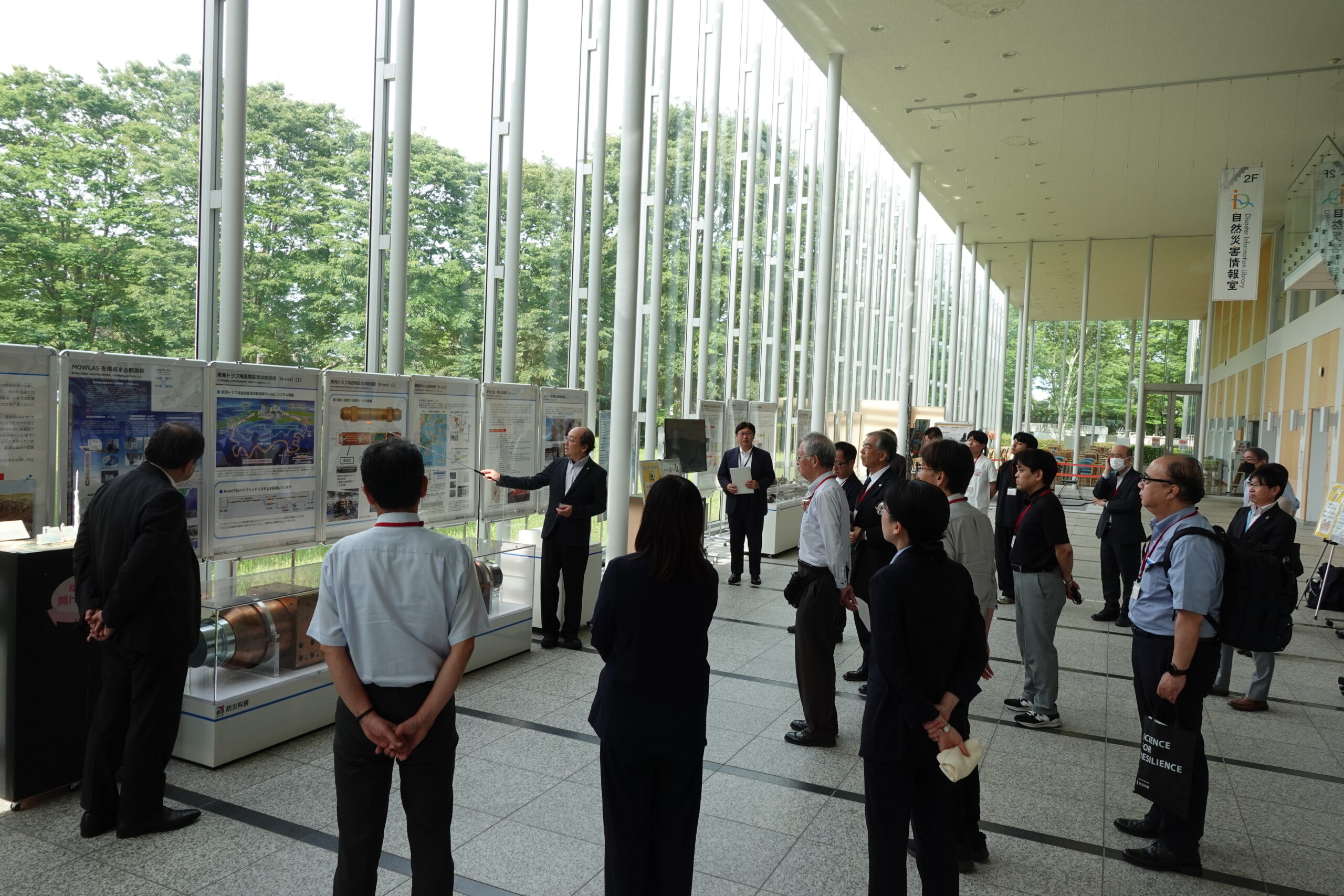
▲図1 青井センター長によるご説明
N-netは、南海トラフ地震の想定震源域のうち、既存のDONETより西側に位置する高知県沖から日向灘にかけての海域に整備された観測網です。長年「観測空白域」とされてきたこの海域での観測を可能にし、南海トラフ全体を連続的に捉える体制の構築に寄与しています。見学では模型も用いながら、その構成や特徴について分かりやすく解説いただきました。
続いて、1時間に300mmの豪雨を再現できる世界最大規模の「大型降雨実験施設」を見学しました。筑波大学リスク・レジリエンス工学学位プログラムで協働大学院教授も務める酒井直樹氏(水・土砂防災研究部門 副研究部門長)のファシリテートにより、参加者は大雨と暴風を実際に体験しました。
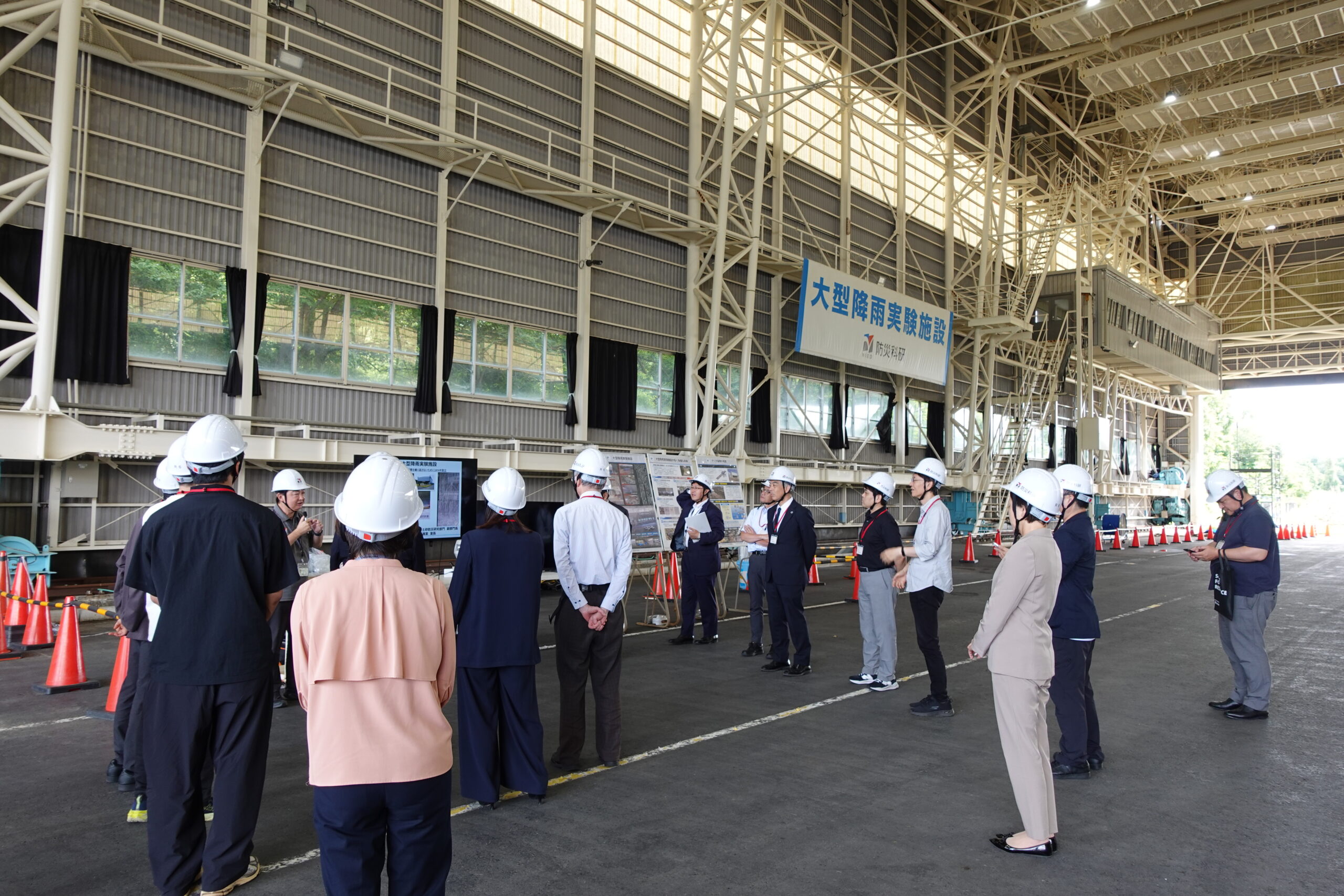
▲図2 酒井副研究部門長によるご説明
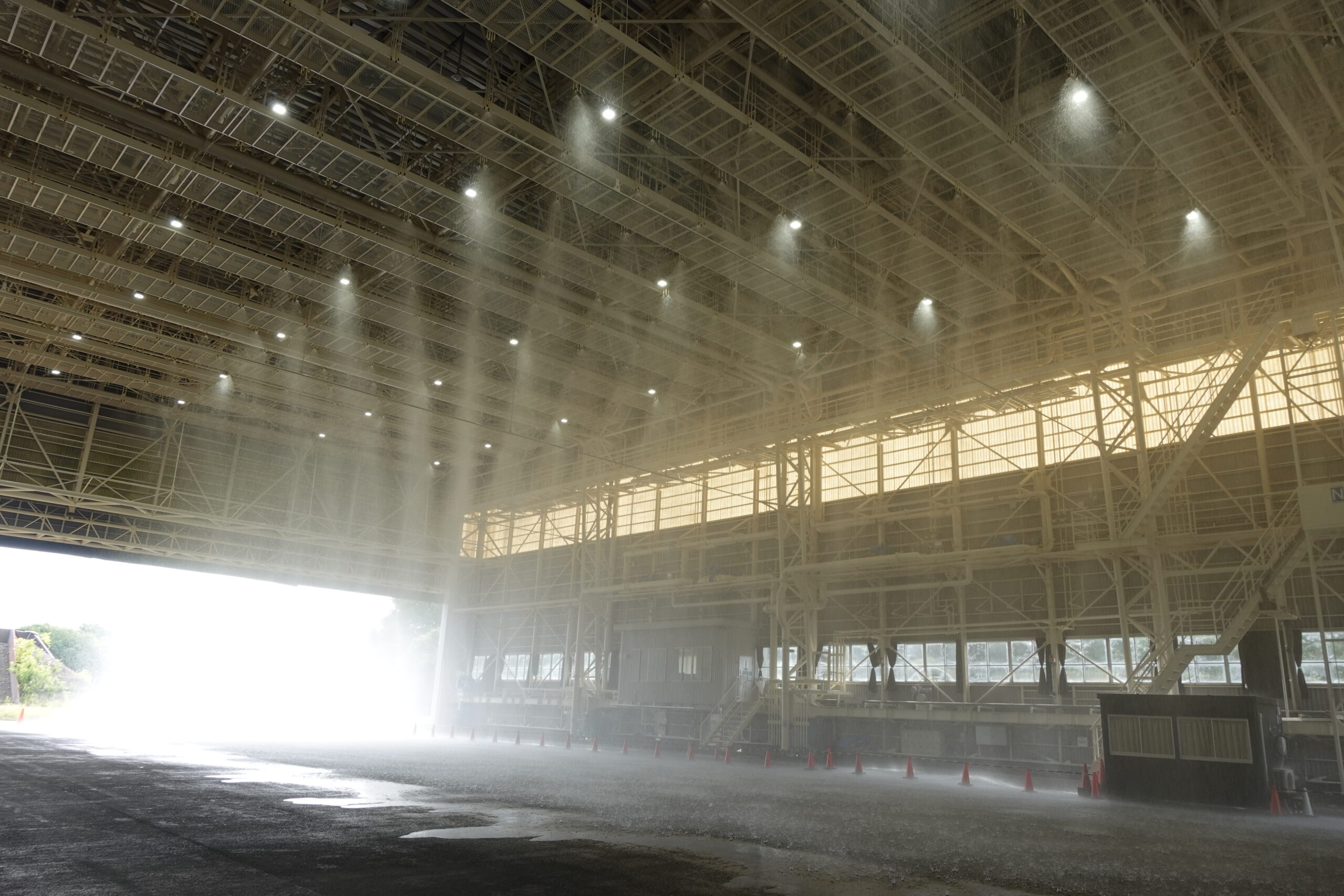
▲図3 天井付近のノズルから雨が降る様子
参加者からは「視界が非常に悪く、互いの声もほとんど聞こえなかった」「夜間や装備のない状況での災害を想像し、備えの重要性を実感した」といった声が寄せられました。こうした体験を通じて、防災意識の向上に加え、企業にとっては自組織での活用検討、大学院生にとっては研究への示唆など、それぞれの立場に応じた気づきにつながる有意義な機会となりました。
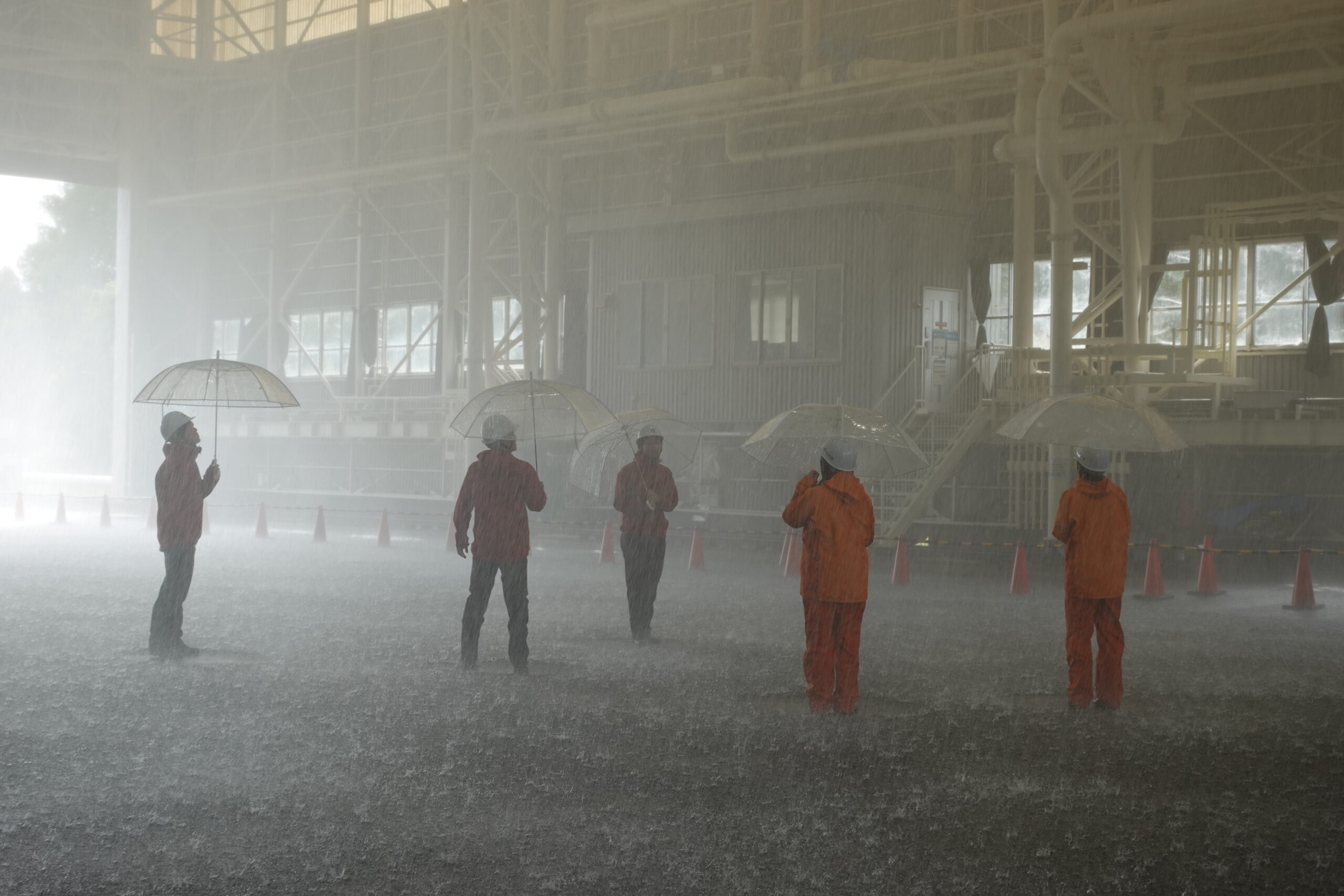
▲図4 参加者の大雨・暴風体験の様子
最後に、貴重な機会を設けていただいた防災科学技術研究所の皆様に、心より御礼申し上げます。
On June 16, the FY2026 Consortium General Meeting and a facility tour were held at the National Research Institute for Earth Science and Disaster Resilience (NIED) in Tsukuba, Ibaraki. This article outlines the highlights of the tour.
Dr. AOI Shin, Director of the Center for Earthquake, Tsunami and Volcano Observation Research, introduced the Monitoring of Waves on Land and Seafloor (MOWLAS), Japan’s integrated system for real-time monitoring of earthquakes, tsunamis, and volcanoes. Particular focus was given to the Nankai Trough Seafloor Observation Network for Earthquakes and Tsunamis (N-net), which began full-scale operation in 2025.
▲Fig 1. Presentation by Dr. Aoi
N-net covers the offshore area from Kochi Prefecture to the Hyuga-nada Sea, west of the existing DONET network. This region had long been a data gap, and N-net now enables continuous observation across the entire Nankai Trough. Its structure and features were clearly explained using a model.
Participants also visited a large-scale rainfall simulation facility capable of reproducing extreme rainfall of up to 300 mm per hour. Under the guidance of Dr. SAKAI Naoki, participants experienced heavy rain and strong winds firsthand.
▲Fig 2. Presentation by Dr. Sakai
▲Fig 3. Rain falling from a nozzle near the ceiling
They noted poor visibility and difficulty communicating, and many realized the importance of preparedness in extreme conditions. The tour provided valuable insights not only for disaster awareness, but also for practical applications in industry and research.
▲Fig 4. Participants experiencing heavy rain and strong winds
We sincerely thank NIED for this valuable opportunity!